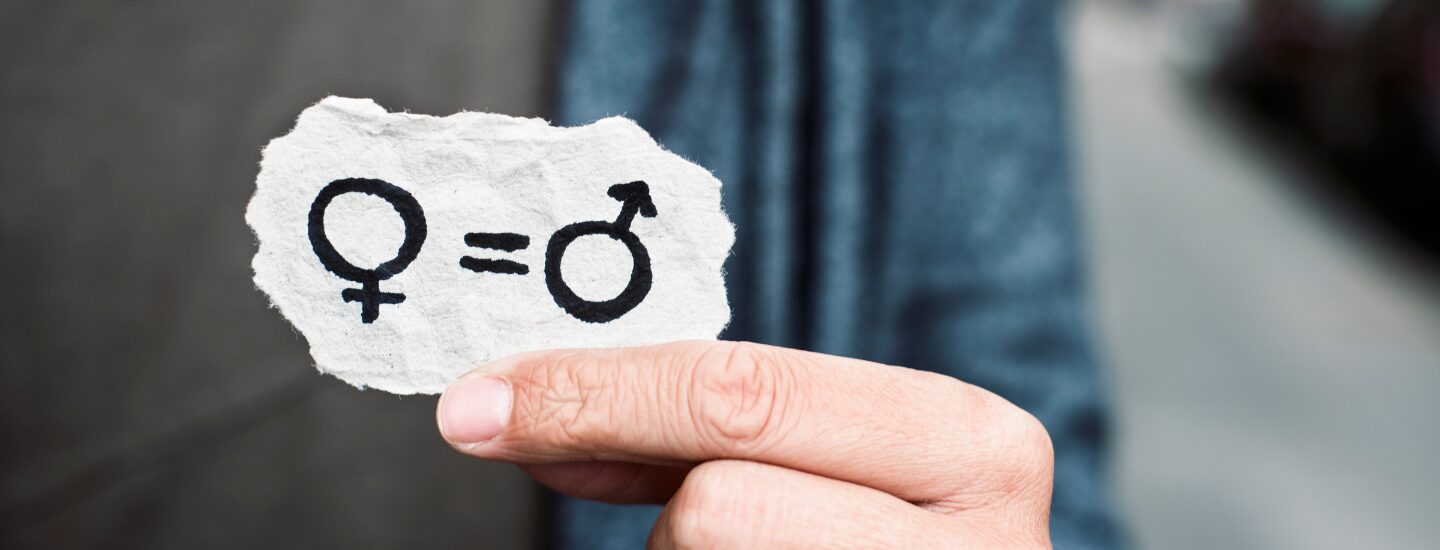
Many years have passed since I first began to feel the different treatment I received from the men in my family, often for the very same achievements. No matter how great the achievement or the success, it could almost never compete with the "magnitude" of what my brothers, classmates, or cousins had done — simply because they happened to have been born men.
Often, in fact, I did not feel fully worthy of praise; I felt as though I did not deserve it.
Pressure, violence, and bullying — especially when they begin within the immediate family and then spread to the wider circle — have the power to convince girls and women that they are worthless, to instill low self-esteem and self-doubt. Often, all of this treatment can lead girls to internalize these norms without even realizing it. This cycle is dangerous, because it can drive women — themselves victims of this mindset — one day to inflict the very same treatment on other girls.
It is said that "sexism" and "misogyny" are concepts easily spotted — we need only know where to look. We can begin by examining them in the simplest form of human expression: language and communication. The way we say things, and what we choose to say, reveals a great deal about how we see the world; after all, language is the first human act of making sense of the world around us.
If a word is offensive in its very structure toward a marginalized group, a child raised in an environment where that word is used constantly, without any context, will never question its meaning. Instead, it will shape a particular current of thought — a kind of mindset that holds "it is so because it is so." All of this feeds into a process of collective thought known as an "egregore": meaning that once enough people believe and practice something, it comes to feel entirely natural — take, for instance, certain gender stereotypes: women are emotional, men are logical.
Most girls are born and raised in environments that are not welcoming to them. They are treated as second-class citizens; they live in places where no law dictates what a man may do with his own body, yet there are countless laws and prejudices directed against women.
To hate a person is one thing; but to hate someone for something they never chose is something else entirely.
Perhaps the individuals who spread so much hatred are in the grip of an identity crisis: they do not know themselves, nor do they see reality. To them, everything on the other side of the wall looks like a threat. It is, of course, a Spartan mentality — and I cannot tell whether the cause is the steroid testosterone that has swollen their brains nearly out of their skulls, or simply the fear of the unknown: the fear that they might lose their power, and with it their manhood. And all of this rests on a single fact — that when a person has no worthy quality of their own, they will fiercely push and defend notions such as ethnicity, religion, and even gender ideology.
This harmful behavior weighs heavily on everyone — not only on women, but on men as well.
I have never managed to find the root, or the reason, behind all the injustice and the relentless discrimination against women. Perhaps it comes from fear, perhaps from an inability to understand, or perhaps discrimination has, over the years, hardened into an unwritten custom that fits men like a glove — and they guard this whole mindset like the apple of their eye.
Women today must understand that they are no one's measuring stick for honor. They represent only themselves — and that they should do to the fullest. Women are not property; they belong to no one but themselves.