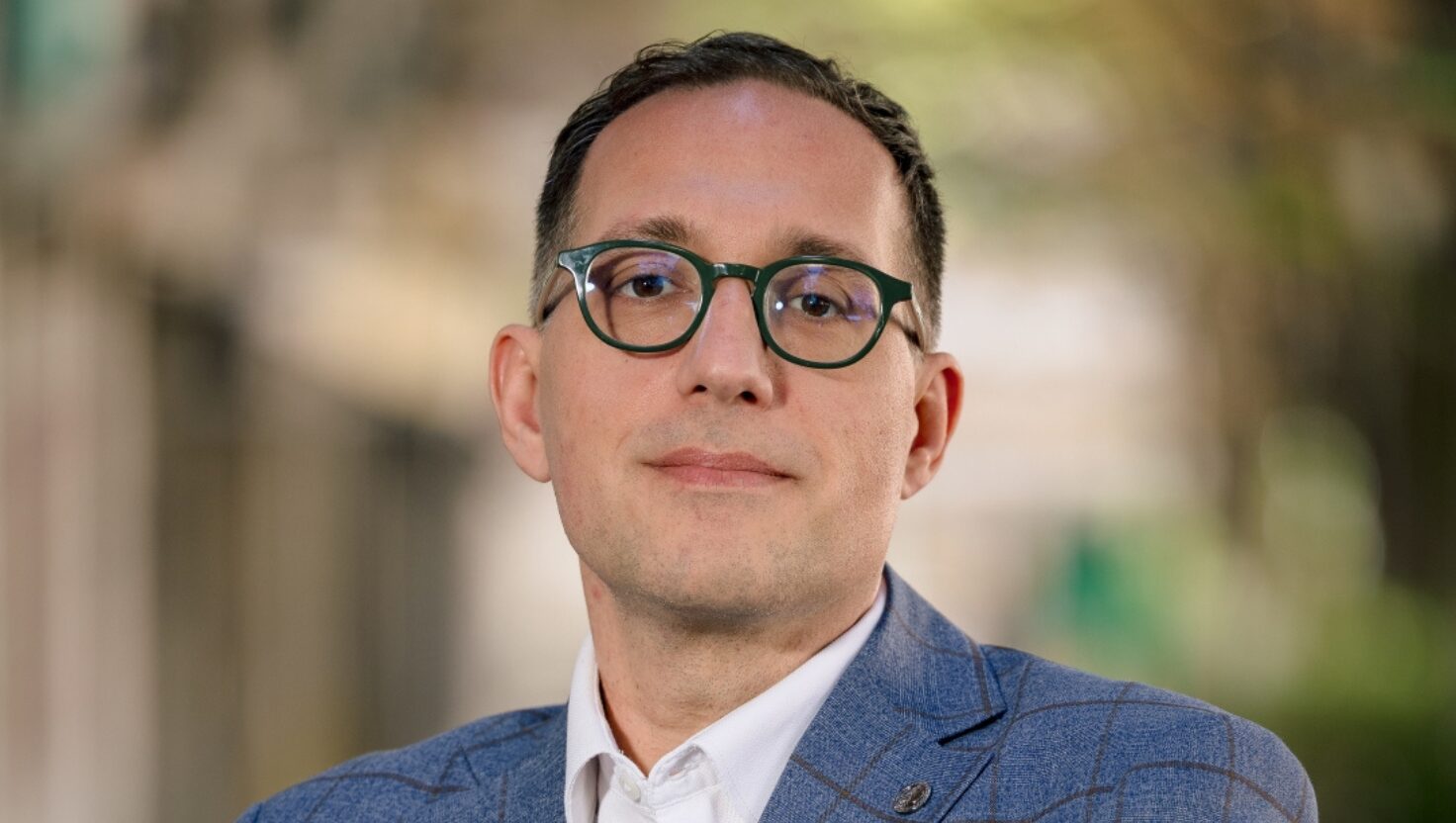
At a time when social media is increasingly influencing the way young people perceive reality, journalist, presenter and influencer Almedina Ismajli, in a conversation for Mollëkuqja.mk, emphasized that digital platforms have opened space for new voices, but at the same time continue to feed stereotypes and superficial content. She spoke about the impact of social media on young people, the challenges of online activism, gender equality, the responsibility of influencers, and the need for more critical thinking in the digital space.
How do you see the impact of social platforms on the advancement of gender equality among young people? Have they created more space for marginalized voices, or do they continue to reproduce existing stereotypes?
Social media has given space to voices that were not heard before, but let's be blunt, they are not as progressive as they appear. Alongside activism, they continue to feed stereotypes every day, especially through unrealistic appearance standards and outdated roles packaged as 'modernity'. So yes, there is more voice, but also a lot of noise that often drowns out the real message.
What are the most positive impacts you have noticed from online feminist activism, especially among young people, and what are the main risks that social media brings to gender issues?
The positive side is that young people today react faster and do not stay silent as they used to. But the problem is that much of this 'activism' has remained at the level of posts and stories. It has become easy to appear engaged without actually doing anything. The greatest risk is precisely this — the trivialization of a serious cause into something consumed as a trend.
Do you think that some of the ways activists choose to approach the 'fight' for gender equality can lead to undesirable outcomes?
Absolutely yes. There are many who use feminism as a label for attention. Sensationalist approaches, excessive dramatization and extreme division between genders only damage the cause. Instead of talking about equality, an artificial conflict is often created that sells better on social media. This is not activism.
From my experience in the digital space, I have noticed that young people are often quickly influenced by these narratives, without analyzing how sustainable or real they are. Nevertheless, I generally believe that we have a healthy and intelligent youth, who at the end of the day knows how to distinguish what is real from what is simply noise on social media.
How much of a negative perception do influencers create today through their approaches to addressing issues or advertisements, and how do you manage this yourself?
Nevertheless, I appreciate influencing in our country, because in general our influencers are more natural, simpler and more authentic compared to what we see abroad. We do not have so much 'artificial perfection', and that is a great value.
Many of them deliver good messages and serve as positive examples for young people. Influencers have greater responsibility than they acknowledge. When you promote everything for payment, without filter and without values, it can automatically have a negative impact on perception, even for serious issues such as gender ones.
I personally try to be very selective with collaborations and not to promote something I do not believe in myself. In fact, you have never heard me say 'this product changed my life', because I believe I must be genuine and stay true to my audience. In the end, people can feel when something is real and when it is not.
What needs to change in the way social platforms are used, so that they contribute more effectively to the advancement of gender equality and not to regression?
I believe the challenge lies not only in the use of social platforms, but in the way content is structured and consumed within them. Algorithms often favor fast, sensational and superficial content, while socially significant topics, such as gender equality, do not always receive the attention they deserve.
Nevertheless, it is very important to highlight the progress as well. Today there is a much higher level of awareness, especially among women and young people, who have greater access to educational and informative content. Discussions about violence, personal experiences and gender inequalities have become more open, something that was much more restricted before. This has helped normalize dialogue and empower many individuals to better understand their rights and to react, or to report. To advance further, a more responsible approach is needed from all parties: content creators, the media and the audience itself.
It is essential to promote critical thinking and to favor content that educates and informs, not only that which generates immediate reactions.
In essence, gender equality is not built solely in the digital space, but social media can be a very powerful instrument of progress when used with awareness and proper direction.