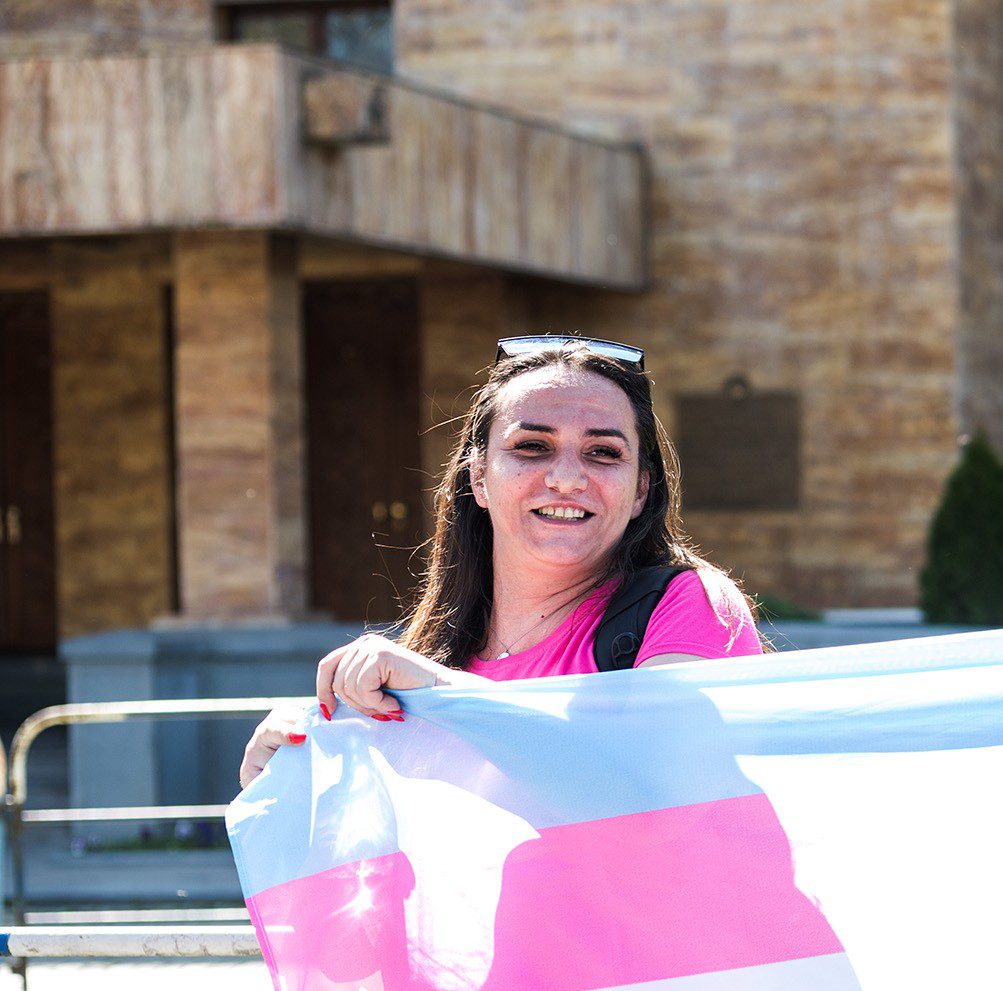
In a society where “normality” is narrowly defined and any queer identity is often stigmatized or excluded, LGBTQI+ people face significant barriers in education, employment, and public participation. In this interview for Mollëkuqja, a sociologist from the country, herself a member of the LGBTQI+ community, who for personal reasons asked not to have her name published, speaks about how social pressure, institutional discrimination, and family rejection shape people’s lives and opportunities, as well as about the structural and legal changes needed to build a more open and inclusive society.
How does social and institutional treatment of LGBTQI+ people affect their social position and their opportunities for education, employment, and public participation?
Society is built upon a rigid division between what is considered “normal” and what is labeled “deviant.” Any identity that does not conform to the heteronormative model is often stigmatized or excluded. Laws and institutional practices reflect specific expectations about gender, family, and marriage, thereby legitimizing a single model of living. This model functions as a rigid and idealized normative standard, which in practice is difficult to attain even for much of the heterosexual majority itself.
This exclusion materializes in concrete barriers. In schools, the lack of representation and the tolerance of bullying create insecurity and lead to early dropout. In the labor market, fear of discrimination results in the concealment of identity, self-censorship, and limited opportunities for career advancement. Institutions often fail to provide effective protection, allowing discrimination to become normalized. As a result, a structural gap emerges between those who conform to the norm and those considered “outside” it, producing persistent inequalities at every social level.
What social effects do ongoing stigmatization, family rejection, and institutional discrimination produce in terms of integration, social mobility, and the social capital of LGBTQI+ people?
In the Balkans, much of what we know about queer people often comes from political disinformation or from bio-essentialist educational approaches that refuse to view human beings as social and political actors. In this context, stigmatization goes hand in hand with sexism and misogyny. Society is presented with a rigid model of what constitutes a “real man” and a “real woman,” accompanied by a list of expected characteristics and standards. When these standards are not met, individuals face difficulties in integration, regardless of their sexual orientation.
This simplified dynamic of “blue boys, pink girls” generates continuous mechanisms of labeling (labeling theory), limiting social and familial acceptance. As a consequence, individuals are left without emotional and economic support during crucial stages of their development and enter adulthood in a vulnerable and unprotected position. This condition directly affects their life trajectory, restricting opportunities to build a stable social life.
From a sociological perspective, which historical, cultural, religious, and political factors contribute to societies in Albanian-speaking countries and in the Balkans remaining more resistant to sexual and gender diversity?
Discrimination is not an individual trait but a systemic phenomenon. People are not born hating what is different; such attitudes are learned and reinforced through the media, politics, and religious institutions. They exist in public discourse long before they appear in law or public policy.
Albanian-speaking and Balkan societies, shaped by long histories of conflict and political instability, often remain in a state of defensive conservatism, fearful of anything perceived as new or different. In such a context, sexual and gender diversity is not viewed as a social reality but as a threat to traditional structures, particularly the traditional nuclear family.
Another factor is the lack of social scientific research and the way social sciences are treated in these countries. The way a society invests, or fails to invest, in social analysis and public discourse reveals how it positions marginalized communities within the chain of law–institutions–individual. What we know about queer people often relies on insufficiently verified “biological facts” or on selective stigmatization reproduced from Western media narratives. The lived experiences and social dynamics shaping LGBTQI+ identities in our context remain largely under-researched. Without clear education about identity, values, and the politics of recognition, society remains uncertain about its position toward queer people, women, and ethnic minorities, thereby producing continuous resistance to change.
How does social pressure to conform and to conceal one’s identity affect the formation of social identity and the family, community, and professional relationships of LGBTQI+ individuals?
When society sends the message that a certain identity is unacceptable, many queer individuals either struggle to clearly articulate their belonging or feel compelled to conceal it for years. In some cases, the pressure is so intense that individuals deny their own identity in order to survive socially.
This pressure often leads to a desire to migrate, especially among young queer people who seek environments where there is greater harmony between the law and everyday life. Migration becomes not only an economic choice but a strategy for safety and dignity.
At the family level, the traditional family— which in theory should be a safe space—can become a source of risk. Concealment, fear of exposure, and conflicts around “honor” create tensions among family members and, in extreme cases, threaten the individual’s physical and emotional safety.
At the social and professional level, queer people are often forced to build networks discreetly or exclusively online. This social isolation also affects access to information—for example, the lack of education about sexual health, safe practices, and the inability to seek medical or social assistance increases vulnerability in their lives. When identity must be hidden, seeking help becomes more difficult.
What role can professional psychological and social support play in healing from these social traumas, and what needs to change in society for these individuals to feel safer and more accepted?
Psychological support would undoubtedly be highly beneficial; any form of therapy or professional counseling can help individuals process the trauma of rejection, fear, and stigmatization. However, perhaps even more urgent than this is the creation of safe spaces within society—spaces where safety and protection are not conditional but guaranteed. At present, we live in a reality where queer people are physically unsafe, risk being exposed against their will, being rejected by their families or communities, and even suffering harm.
Therefore, structural change is necessary. Education would be a fundamental step—not only as biological or psychological information, but as education about identity, diversity, and rights. Open dialogue is equally important. In our society, there is still a fog of mystery surrounding queer identities; many people do not understand what a queer identity means, and some do not even acknowledge its existence. This lack of understanding feeds fear, and fear feeds exclusion.
Which public policies and structural interventions (in education, media, the labor market, and legislation) would have the greatest impact in reducing discrimination against LGBTQI+ people and building a more inclusive culture?
First and foremost, anti-discrimination laws must be genuinely enforced, especially in schools, workplaces, and hiring processes. North Macedonia has ratified numerous conventions and adopted various laws, often within the framework of European integration, yet these frequently remain on paper and are not institutionally implemented. People may formally possess rights, but they lack effective mechanisms to exercise them.
In education, beyond teaching about diversity, concrete protection is needed for queer youth and children. At a minimum, teachers and school staff must be trained to address bullying and harassment—and not become participants in it themselves.
The media also play a significant role. Queer people are often portrayed through language that frames them as deviant, as a “problem,” or as a moral threat, sometimes even using tones that associate them with disease or criminality solely because of their sexuality. This creates a collective narrative in which queer identity is presented as pathological or dangerous, rather than as a normal part of human diversity.
Queer people have always existed and will continue to exist. The more their identity is treated as something that can be “corrected” or erased, the more society produces violence and exclusion. Discrimination does not exist in isolation; every form of discrimination reinforces another and ultimately weakens social cohesion itself.