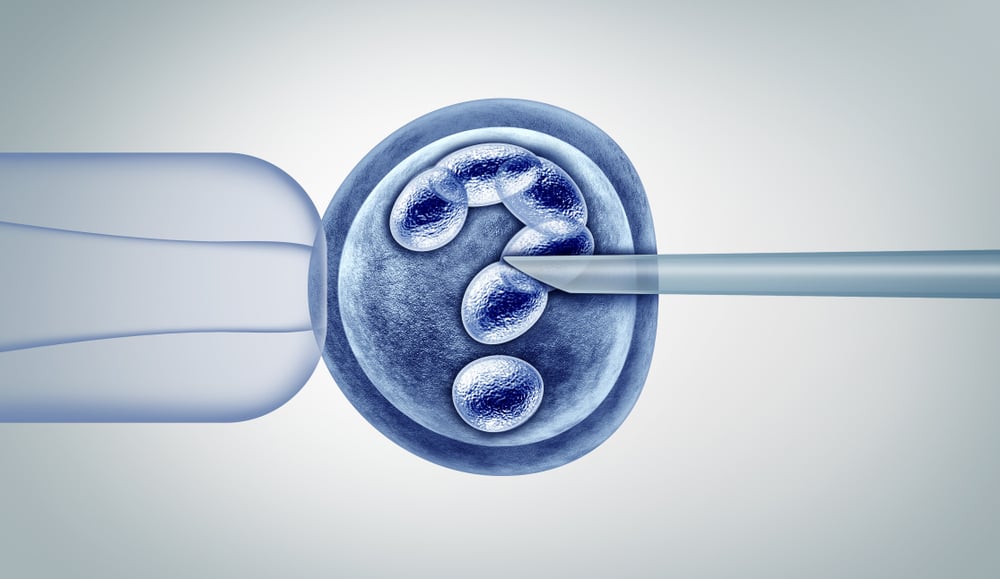
Is determining the sex of a child an absolute right of the parents, an act of human interference in the natural order, or a challenge to the best interest of the child?
Rapid developments in technology and medicine, particularly in the field of assisted reproduction, have brought great benefits to couples who face difficulties conceiving biologically. This is certainly to be commended, as many of them have been able to fulfill their dream of becoming parents. However, this form of parenthood has opened numerous legal, moral, ethical, and religious debates, especially when it comes to the selection of a child’s sex and other possible biomedical procedures that are legally prohibited. Artificial fertilization procedures and preimplantation genetic diagnosis can determine the biological sex of an embryo, opening the possibility for choosing whether the future child will be a boy or a girl. However, sex selection concerns only the biological sex of the child and does not affect their gender identity or family lineage, which are distinct concepts and cannot be predetermined through biomedical methods before birth. Biological sex is determined by chromosomes and innate physical characteristics, while gender identity reflects how an individual experiences and expresses themselves; as female, male, or otherwise, and this too cannot be managed through medical technology. Family lineage, on the other hand, represents the legal relationship between two or more people, based on which rights and obligations within a family are created. This relationship can be established: (1) biologically (blood lineage), (2) through adoption (civil lineage), or (3) through marriage (affinal lineage). These express personal relationships closely tied to the family structure.
With regard to the issue of sex selection, Article 24 of the Law on Medically Assisted Fertilization in North Macedonia expressly prohibits the use of assisted reproductive procedures for the purpose of selecting the sex of the child, except when it is done to prevent inherited, sex-linked diseases. This legal restriction protects the fundamental principles of gender equality, non-discrimination, and the safeguarding of human rights and dignity, setting a clear boundary between parental autonomy, legal norms, and social responsibility.
Similarly, in Albania, artificial fertilization methods and preimplantation genetic diagnosis are permitted, but sex selection for non-medical reasons is explicitly prohibited by Law No. 8876, On Reproductive Health. According to this law, sex selection for a future child is allowed only in exceptional cases, specifically, when there is a risk of inheriting a serious sex-linked disease (Article 37). Outside these cases, such practice violates principles of gender equality guaranteed by the Constitution and human rights laws, as well as by the Convention on Human Rights and Biomedicine (“The use of medical-assisted reproductive techniques for the purpose of choosing a future child’s sex is prohibited, except to avoid a serious hereditary, sex-linked disease,” Article 14, 1997). This comparison with Albania is not coincidental, since in practice, the desire to have a “boy” or a “girl” remains strong, especially within Albanian families, where this procedure is often perceived as desirable and as a way to fulfill the expectations of a patriarchal and patrilineal culture. This phenomenon has also given rise to what is known as “reproductive tourism,” where many couples from North Macedonia travel to private clinics in Albania to undergo sex selection procedures. Although complete statistical data are lacking, this phenomenon reflects the tension between personal parental desire and legal restrictions, underscoring the need for a structured ethical and legal dialogue. It should not be forgotten that the Law on Medically Assisted Fertilization is among the most liberal and modern laws, recognizing nearly all artificial reproduction methods, except for sex selection.
Parents indeed have the right to decide how and when to create a family, a right stemming from respect for private and family life, protected also by Article 8 of the European Convention on Human Rights. However, certain individual desires remind us that this freedom is not absolute. When the desire for sex selection exceeds medical purposes, it can be misused, turning into a means of imposing personal preferences on the determination of a child’s sex.Through legal regulation and adherence to ethical codes, the state intervenes not to restrict parental wishes, but to prevent the creation of a “mosaic” of human life and to protect the public interest, the principle of gender equality, and the dignity of the unborn individual. In this context, legal limitations on sex selection are justified, as they ensure that advances in medical science serve life itself, not personal preference. What is most striking to me is that this occurs within societies that often oppose the concepts of gender identity and view them as moral threats, while covertly engaging in procedures for determining the biological sex of their children.
From an ethical standpoint, sex selection raises essential questions about the boundaries of parental autonomy: does the right to become a parent also include the right to choose the child’s sex? According to contemporary bioethics, any action that affects a future individual must respect the principles of justice, ensuring that reproductive choices do not turn the child into a bespoke object and do not undermine gender equality. Sex selection for non-medical reasons violates these principles because it treats the child as a means of fulfilling parental wishes, risks reinforcing gender stereotypes, and harms efforts toward equality, particularly in societies with a history of gender preference.
Assisted reproductive technology allows highly accurate sex identification, which is scientifically proven; however, legal regulation and ethical codes are essential to prevent abuse. The law must ensure that advances in medical science serve human needs and the improvement of life, not markets or parental expectations. Therefore, legal systems impose boundaries through prohibitions precisely to restrain uncontrolled human ambition and patriarchal egos. Let us not forget that sex selection, the enhancement of a future child’s physical or intellectual abilities, and similar methods fall under eugenics, which is universally prohibited for ethical and legal reasons, in order to protect the dignity and rights of individuals who have not yet been born.
The balance that must be established and maintained is clear: respect for parents’ reproductive autonomy, protection of gender equality for the child and society, and the fulfillment of legal obligations within ethical and moral boundaries. Only by understanding the difference between biological sex, gender identity, and family lineage (blood, adoption, and marriage), can we create reproductive policies and practices that benefit from scientific progress while preserving dignity, equality, and social justice, always keeping in mind the best interests of the child from the moment of conception. In the pursuit of choice, humanity often forgets that life is not a project to be programmed, but a gift to be respected. Thus, it is not in human hands to alter the natural course of life, which remains beyond our desires and control. Even though assisted reproductive technologies offer this possibility, they can never replace the natural grandeur of creation—remembering that nothing about the child is artificial, since intervention occurs only in the conception process when natural conception is impossible. It is precisely this balance that bioethics seeks to protect, ensuring that scientific advancement never exceeds the limits of human dignity or disrupts the natural order of life that the law aims to preserve.