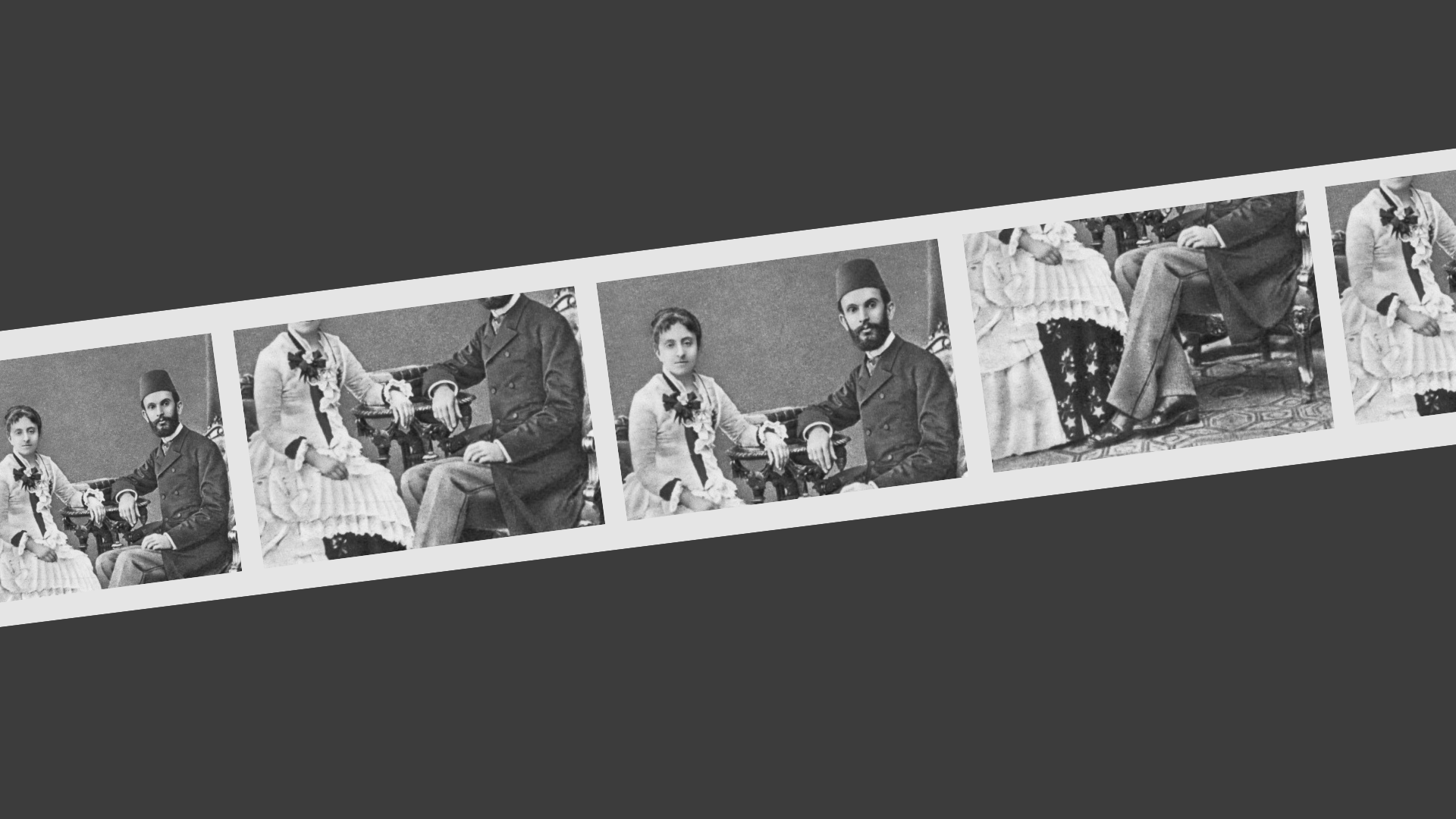
“Communism and fascism are no different from each other if they set up a dictatorship and murder people.” These were the musings of Musine Kokalari, a close friend of Selfixhe Ciu; both of them women from Gjirokaster, and both of them women who would break certain taboos. Selfixhe would publish the first poem in a newspaper and so make history as the first Albanian woman in poetry, whereas Musine would publish the first novel, and thus become the first Albanian woman in prose. Surely, there might have been other women authors who had written works before them in secret, but we are talking about published literature. With a wit that was ahead of her time, Selfixhe saw the risk within the thing in which others hoped to find salvation. Musine would unequivocally say to Selfixhe: “You are a philosopher of the Enlightenment era. As a writer, you must never accept that an Albanian be killed or subjugated. Musine was a determined antifascist. The rest of us had no idea what fate awaited our Albania, but she did. Her eyes saw beyond what most of us were capable of.” (excerpt from The Memoirs of Selfixhe Ciu Broja).
Gender equality was what pushed Selfixhe to become a sworn communist in the beginning. She hoped that this system would treat people equally, but whether women were considered people, whether they were categorized as such in that system and every other that we’ve known, is a medieval issue that must be discussed.
“The Deceitful Wave” was the name of the poem published on November 28th 1935 in the newspaper Populli, signed under the pseudonym Columbus. Her publication was quickly turned into a huge story: it was well received, discussed, and scrutinized. “It was hard to believe that it was written by a girl,” it was said that a man’s hand was behind it. Columbus was called “the sole flower that brings about spring in our press” and was called upon by a public service announcement to “come out into the open, our sister, and reveal yourself”. Someone would define her as “the flagship of our evolution,” whose aim was “to topple a cliff with the signs of Albanian vices.”
Behind Columbus was a 17 year old girl from Gjirokaster; Selfixhe Ciu. From that day on, she became a voice that did not ask for permission. A voice that spoke for women, for dignity, for freedom. “This song of mine,” she writes, “will sing the gusts of freedom, it will spill over human woes.” According to Musine Kokalari, Selfixhe Ciu was a romantic communist and the first writer to appear in that era’s press under the pseudonym Columbus, (while she herself would later write under the pseudonym Muse), a girl with big dreams, a profound passion for school and literature, but held back by her surroundings, her family and her own idealism. Her friend Musine mentions in her memoirs that she [Selfixhe] was madly in love with Petro Marko, as they were both journalists and were both attached to communism as this ideal salvation, but this love and trust would grow cold with the passage of time, leaving her disappointed and vulnerable, a pure soul that never could’ve imagined that ideals would turn into violence.
Selfixhe conveys an early civic kind of feminism, wherein the emancipation of women is closely related to social and national progress. In her eyes, women are oppressed by patriarchal structures that treat them with contempt and keep them subjugated. In her writings for “Bota e re”, the woman is represented as a prisoner of a male order that silences her voice, but also as a force that awaits liberation through solidarity and collective action.
Selfixhe’s feminism isn’t individualistic, instead it is rooted in the belief of allyship between women and progressive youth, who see gender equality as part of a wider social revolution. Her friendship and collaboration with Musine Kokalari reinforces this idea, as writing for them is not an intimate shelter, but a means of fighting, a form of political and moral engagement for women’s liberation. Even after internment and historical disappointment, the figure of Selfixhe remains one of feminism at its core, because she never wavered from her stance that women have the right to think, to write, and to see beyond the limits that are imposed upon them. Her feminism isn’t loud, but it is insistent, built upon the written word as a defiant act and on the idea that women’s liberation is not a gift, but a right that needs to be won. Based on the fates of women she had met, she says “I became aware that to be a woman is not a misfortune. And that awareness needs to be extended to every family and society.”
This was the first Albanian woman who published literature in Albania, a pioneer of the stance that if a woman is mistreated, disappointed or abused, she reserves the right to divorce. She is called a pioneer of divorce not because she legally invented divorce, but because she articulated, defended and legitimized it as a right of the Albanian woman, in a time when this was almost unimaginable, considering that in the modern state, the issue of divorce was legally accepted very late. The fate of Selfixhe was such that she married Xhemal Broja and together with her husband, they suffered many internments, but her ideas still live on, more so in the form of legends rather than documented, and her figure itself is inspiration for many young women who hear of the girl with the nickname “the dove who was a huge activist for freedom.”