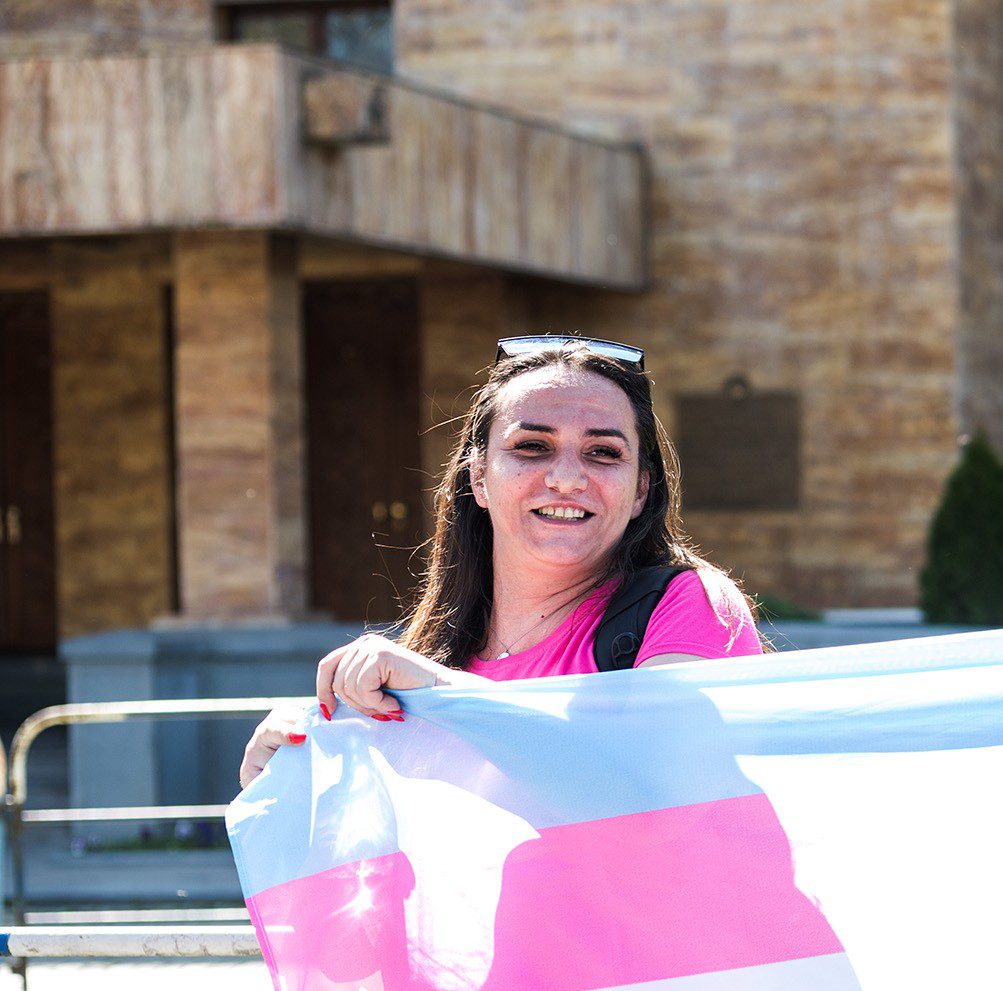
The lack of legal gender recognition and institutional barriers continue to burden the lives of transgender people in North Macedonia, despite the existing legal framework. Lila Miliqco-founder of Transforma, spoke to Mollëkuqja about these challenges and the need for changes in practice, emphasizing the importance of political will and the inclusion of the community in decision-making processes.
How do you assess the state of the rights of transgender people and the broader LGBTIQ+ community in North Macedonia, and what are the key institutional failures?
“The state of the rights of transgender people and the broader LGBTIQ+ community in North Macedonia can be assessed as partially regulated at the legal level, but insufficiently protected in practice. The adoption of the Law on Prevention and Protection against Discrimination, which explicitly includes sexual orientation and gender identity as grounds for protection, represents significant progress. However, its implementation remains limited, while transgender people continue to face discrimination, a lack of institutional awareness, and a lack of effective protection mechanisms.
The key institutional failures are related to the absence of systemic and coordinated solutions. There is still no functional and accessible procedure for legal gender recognition, no clear and binding protocols for gender-affirming healthcare for trans persons, and policies guaranteeing equal access to education, social protection, and employment remain lacking. Furthermore, cases of hate speech and violence are often not recognized or properly processed by institutions.
In our work, we continuously document cases of discrimination and institutional treatment that are not in line with legal obligations, indicating a serious gap between the existing legal framework and its implementation in practice.
The problem does not lie solely in the laws, but also in the lack of political will, institutional capacity, and a proactive approach. As a result, transgender people in North Macedonia continue to live in conditions of legal insecurity and with limited access to fundamental rights and services.”
How does the lack of legal gender recognition affect the daily lives of transgender people, and why has this process been delayed for years?
“The lack of legal gender recognition has direct and serious consequences for the daily lives of transgender people, as their legal identity does not correspond with their lived reality and appearance. This means that almost every administrative or institutional procedure, such as applying for a job, accessing healthcare services, traveling, opening a bank account, or simple identification, can result in humiliation, suspicion, denial of service, or exposure to discrimination and violence. For this reason, many trans persons avoid formal employment, healthcare services, or administrative procedures, further deepening their economic and social marginalization.
This situation also creates continuous psychological pressure and a sense of insecurity, as every interaction with institutions carries the risk of forced disclosure of one’s gender identity and discriminatory treatment.
Particularly concerning is the fact that North Macedonia has clear international obligations in this area. The European Court of Human Rights, in the case X v. North Macedonia, found a violation of the right to private life due to the absence of a clear, accessible, and functional procedure for legal gender recognition, emphasizing the state’s obligation to establish a rapid, transparent, and legally secure process. Despite this judgment in 2019, a system enabling the practical realization of this right has still not been established.
The prolonged delay of the process is the result of a lack of political will, institutional hesitation, and the avoidance of responsibility. Instead of a coordinated approach, competencies are often shifted from one institution to another, while the issue is treated as politically sensitive due to pressure from conservative and anti-gender narratives. As a result, transgender people have been living in a legal vacuum for years, despite clear international standards and obligations.”
What systemic barriers do you most frequently encounter in your work as activists, within institutions, the healthcare system, or public discourse, and how do you address them?
“In our work as activists, we most frequently encounter a lack of institutional awareness, bureaucratic resistance, and the absence of a systemic approach to the issues faced by transgender people. Many institutions lack a basic understanding of gender identity, resulting in inappropriate treatment, administrative obstacles, or denial of services.
In practice, we also face concrete cases of discrimination, including in the workplace. We have documented cases in which transgender individuals were subjected to direct discrimination, later confirmed by the Commission for Prevention and Protection against Discrimination. This illustrates that trans persons continue to face serious barriers in accessing the labour market and securing a safe working environment.
Within the healthcare system, an additional challenge is the absence of clear protocols and adequately trained staff for gender-affirming healthcare. The lack of institutional preparedness is also reflected in the limited space for professional and academic discussion. For example, a panel dedicated to the healthcare needs of transgender people at the Faculty of Medicine was cancelled under pressure from anti-gender movements, demonstrating how the issue is often politicized.
At the same time, in public and online spaces, we encounter disinformation, stigmatization, and hate speech. We address these challenges through documentation, legal and psychosocial support, education, public advocacy, and community empowerment.”
How meaningfully are transgender people involved in decision-making processes that directly affect their lives, and do institutions genuinely listen to the community’s voice?
“The meaningful involvement of transgender people in decision-making processes that directly affect their lives remains limited and often symbolic. Although institutions occasionally organize consultations or public hearings, participation does not always translate into real influence on final decisions.
In practice, the views and recommendations of organizations and activists working directly with transgender people are not always substantively incorporated into policy-making, resulting in solutions that fail to reflect the community’s actual needs.
An additional challenge is the absence of continuous and structured dialogue. Involvement is often ad hoc rather than systemic. Without meaningful participation, sustainable and effective policies are difficult to achieve.”
While there are individual positive examples of institutional cooperation, it is essential for institutions to recognize the expertise coming from the community itself and ensure its substantive inclusion from the outset of decision-making processes. Without meaningful participation of transgender people in decision-making, sustainable and effective policies that respond to their real needs are difficult to achieve.”
Is the increased visibility of the LGBTQI+ community translating into greater social acceptance, and why does society in North Macedonia remain resistant?
“The increased visibility of the LGBTQI+ community does not automatically translate into greater social acceptance. While events such as Skopje Pride contribute to visibility and dialogue, they are often accompanied by intensified negative reactions, disinformation, and hate speech, particularly targeting transgender people.
On the other hand, increased visibility is often accompanied by intensified negative reactions, disinformation, and hate speech, particularly when it comes to transgender people. Instead of fostering understanding, visibility is frequently framed as a threat, further deepening stigma and social polarization.
Societal resistance toward the LGBTQI+ community in North Macedonia is closely linked to deeply rooted patriarchal and traditional norms, the strong influence of conservative and anti-gender narratives, and the lack of systematic education on gender, sexual orientation, and human rights. Moreover, when institutions fail to respond clearly and consistently to discrimination and hate speech, this sends a message that such attitudes are socially acceptable.
Visibility is an important step toward social change, but it is not sufficient on its own. It must be accompanied by clear political will, educational policies, and active institutional protection in order to create an environment in which LGBTQI+ persons can live free from fear and discrimination.”
Beyond the legal and institutional debate, the social reality remains equally concerning. Within a single year, 230 cases of hate speech against the LGBTIQ+ community were recorded in North Macedonia.
Hate speech continues to represent a serious challenge, most frequently directed against ethnic communities and LGBTIQ+ persons. Political developments and electoral processes further increase the likelihood of such content. According to the Helsinki Committee, the majority of cases of hate speech and disturbing speech were registered on social media, primarily in the form of comments and posts on personal profiles.