“The justice that was denied to me”
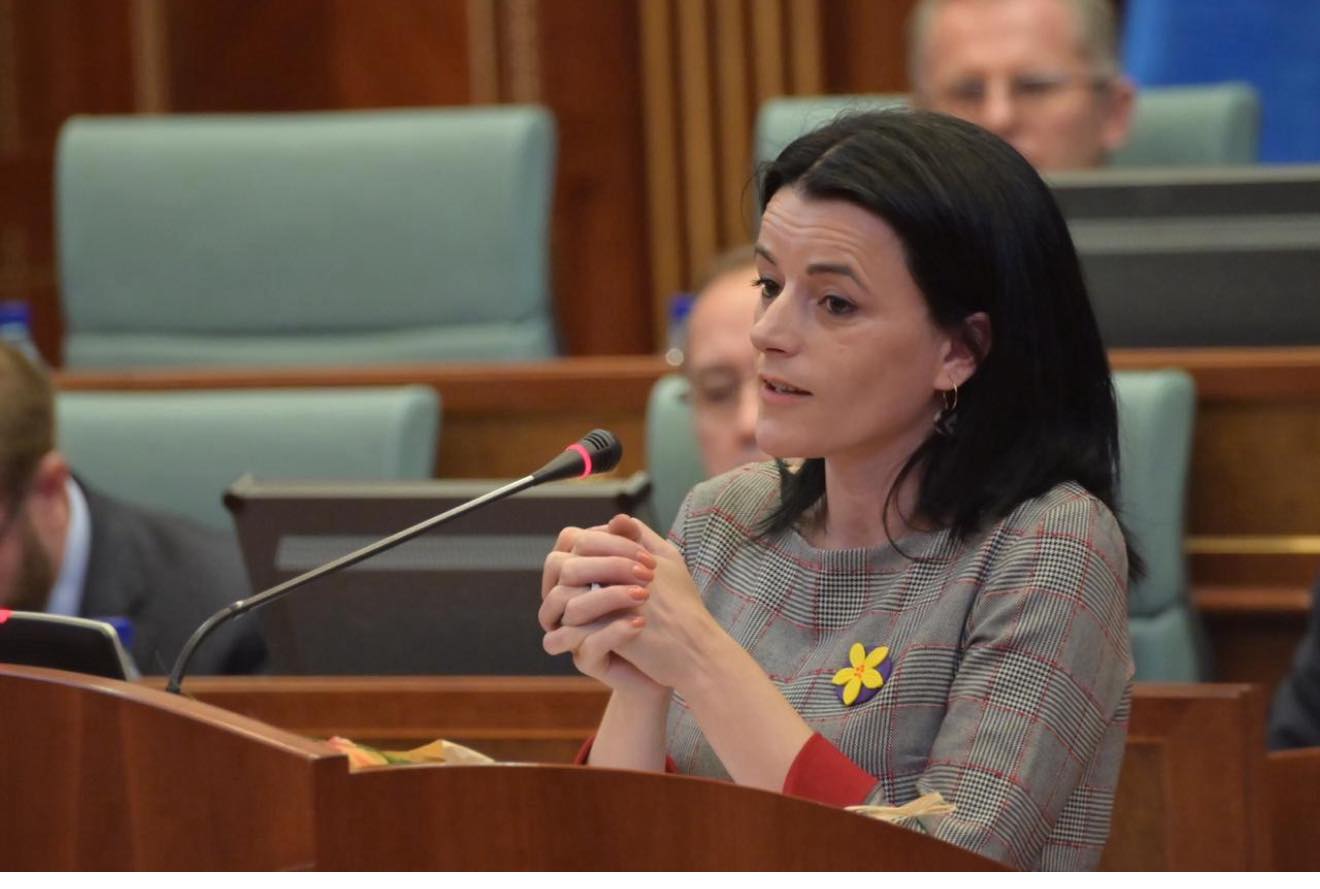
This was one of the moments when the story of Vasfije Krasniqi, a survivor of sexual violence, resonated not only as a personal testimony, but as an act of resistance and the breaking of a long-standing social silence.
For Mollëkuqja, Vasfije shared fragments of her story.
She was only sixteen years old when she experienced sexual violence perpetrated by the Serbian regime during the Kosovo war, a grave crime that for years remained without an institutional response, without justice, and without punishment for the perpetrators.
For a long time, silence was the only way to survive. But that silence was not a choice; it was a consequence of the lack of safety, support, and justice.
“There are several moments that influenced my decision to speak publicly. First and foremost, it was the justice that was denied to me — the injustice that constantly pushed me to speak. Then there were my daughters, who gave me the sense of safety that I had lacked in order to speak out,”Krasniqi said.
The decision to speak publicly did not come suddenly. It was shaped by years of injustice, by unhealed pain, and by an inner voice that could no longer remain silent.
In 2017, she reached out via social media to the Kosovo Rehabilitation Centre for Torture Victims (KRCT), led by Feride Rushiti, openly declaring her identity and expressing her determination to speak publicly.
“At that moment, I stated that I am Vasfije Krasniqi, a survivor of sexual violence, and that I want to speak publicly about my traumatic experience. This happened in 2017, while I spoke publicly for the first time in October 2018,”Krasniqi said.
Today, she is one of the strongest and most outspoken voices against sexual violence and gender-based violence. Her engagement stems from personal experience, but is driven by a sense of responsibility toward society, the understanding that silence only protects perpetrators and deepens the trauma of victims.
Vasfije Krasniqi also speaks openly about institutional failures, both domestic and international. Although legal frameworks exist, the effectiveness of criminal prosecution remains deeply disappointing.
“Crimes of sexual violence have followed a very ‘interesting,’ yet deeply disappointing trajectory for victims. We can only imagine how large the number of victims was in the past whose experiences were not even recognized as criminal acts,”Krasniqi said.
She explains that such acts first had to be criminalized in order for prosecution to be possible. Krasniqi recalls that even at the international level, this heinous crime began to be prosecuted very late.
“Whether in situations of armed conflict or in other contexts. Today, the legal aspects are regulated within every system, and prosecution formally exists. What is concerning is the effectiveness of that prosecution, which leaves much to be desired — or, put differently, is extremely disappointing,”she said.
According to her, the situation in cases of gender-based violence is almost identical.
“Actions are taken, but not to the extent required. And if we refer to official global figures, we see an increase in cases of both sexual violence and gender-based violence,”she said.
Krasniqi emphasized that the obstacles are largely procedural in nature, but are also the result of victims’ lack of awareness and confidence to report cases.
“Reporting is entirely linked to the lack of safety and support available to victims when they consider reporting,”Krasniqi said.
As a survivor who, as a child, endured one of the most horrific forms of sexual violence, and as a victim of Serbia’s political and genocidal objectives, she has lived through multiple layers of trauma. From suffering, she learned to be strong and never give up, even though she says that giving up would have been the easiest option.
“But the moment I created a family and became the mother of two daughters, things changed. I had to think far more about my daughters than about myself. It is precisely my daughters who give me the greatest motivation, followed by my family and other circumstances or aspects that drive me to act in this direction,”Krasniqi said.
She states that not only our society, but no society is truly prepared to meet the needs or create the environment required to support the rehabilitation of victims or ensure their protection.
“This is related to the multidimensional consequences experienced by victims as a result of trauma. Beyond the trauma directly caused by the crime, victims face prejudice, stigmatization, segregation, lack of care, and more. The consequences are numerous and severe — both in treating victims and in creating a supportive environment,”Krasniqi said.
Today, Vasfije has become an inspiration and a role model for many women and girls. Speaking openly, she urged women and girls to find the strength and courage to report every case.
“Failure to report such cases contributes to their increase, contributes to the protection of criminals, and worsens not only the emotional and traumatic condition of victims, but also their social well-being. A victim cannot feel safe in her environment if she does not have the confidence to report her traumatic experience. Protect your rights and act in time. Do not allow your experience to destroy your life,”Krasniqi said.
Vasfije Krasniqi’s testimony highlights the lack of justice and the ongoing institutional challenges in addressing sexual and gender-based violence. Her voice serves as a call for accountability, genuine support for victims, and concrete action to break the cycle of silence.