In a small media market like the one in North Macedonia, journalism often remains trapped in the news cycle of the day, leaving one of its most important forms in the shadows: beat journalism. It is precisely the absence of this approach that limits public debate to quick and superficial reactions, without delving into the depth of the problems that affect society.
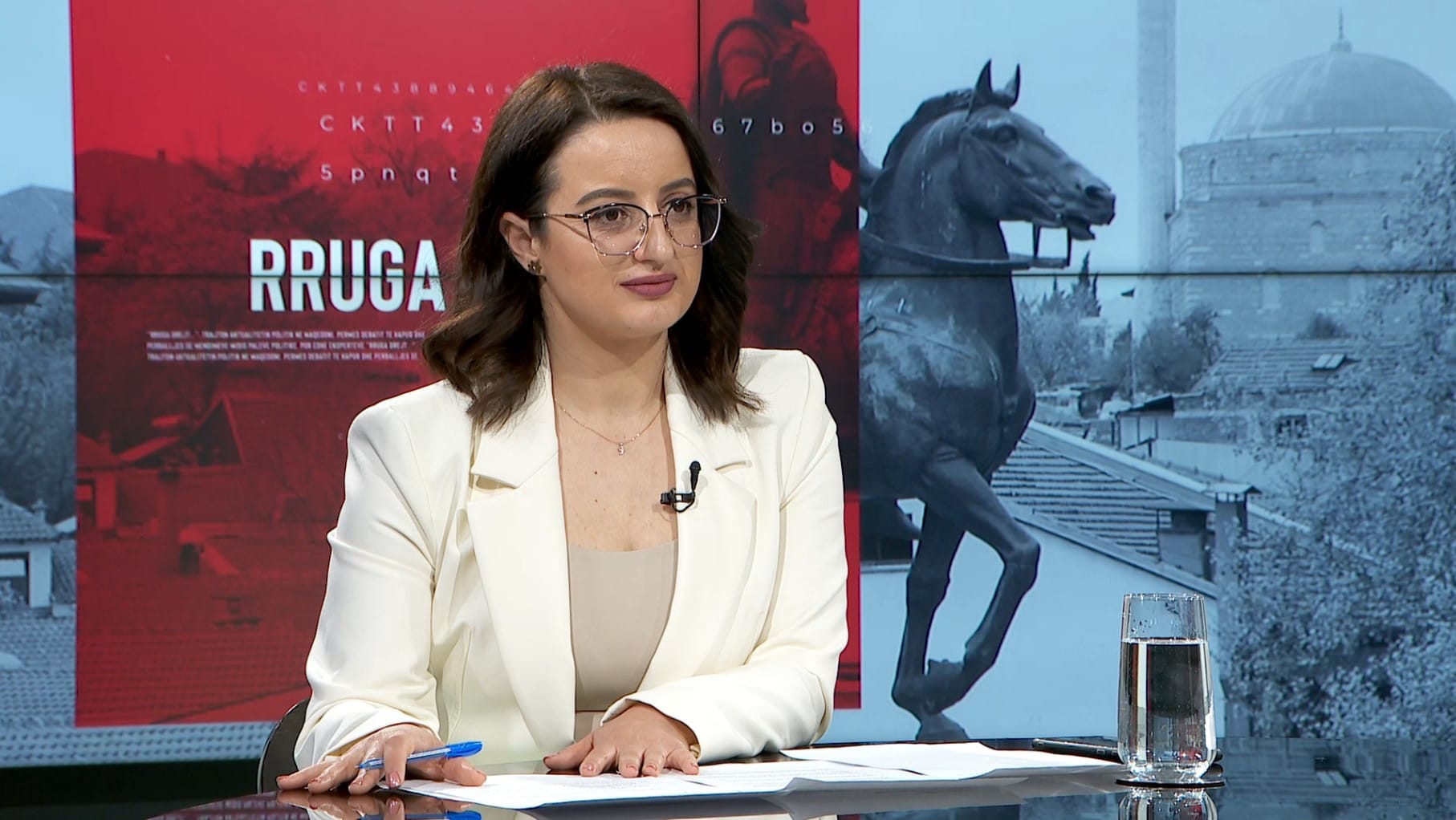
In a conversation with Mollëkuqja, Nora Kaliqi, Chairwoman of the Media Ethics Council in North Macedonia, spoke about the importance of beat journalism as a tool for building critical thinking and for addressing issues that are often left in the shadows — from gender inequality to discrimination and gender-based violence.
She emphasizes that without this approach, media risk remaining at the level of incidents, reporting consequences but not causes.
Kaliqi warned that this absence directly affects the quality of reporting as well, opening the door to stereotypes, discriminatory language, and sensationalism.
In this context, she calls for greater professional responsibility, strengthening of self-regulation, and a media culture that places ethics and human dignity above the "race" for clicks and sensationalism.
In our country there are few beat media outlets. Why does this happen and how important is it for such outlets to exist — ones that encourage critical thinking, especially on "unheard" or taboo issues?
In a small media market like ours, the majority of outlets operate under constant financial pressure, with small editorial teams, limited capacities, and a relentless demand for the rapid production of content. In such circumstances, the focus often shifts toward the news of the day, toward the dynamics of political developments, and toward topics that require an immediate response. As a result, beat journalism remains limited, even though it is among the most important forms of quality journalism.
It is precisely this kind of journalism that holds special value, because it does not stop at the event itself but seeks to explain the process, the context, and the consequences. Beat journalism consistently covers topics that often remain outside public attention — gender inequality, discrimination, women's rights, gender-based violence, poverty, mental health, and the situation of marginalized groups. Its role is therefore essential not only for informing the public, but also for developing critical thinking, broadening public debate, and creating a more socially responsible culture.
When such media outlets are absent, what is lost is precisely that dimension of depth and continuity that society needs in order to understand problems beyond the surface. And when problems are not understood at their core, they are unlikely to be addressed with the seriousness they deserve.
When we talk about reporting on gender issues, it often seems as though media only react when a major incident occurs. Is it precisely the absence of beat journalism that keeps the discussion at the level of incidents rather than phenomena?
Yes, to a large extent this is directly connected to the absence of beat journalism and to the lack of a consistent editorial approach toward gender issues. When gender topics enter the media only in cases of violence, tragedies, killings, or scandals, the public is confronted solely with the most severe consequence of the problem — but not with the causes, the structures, and the culture that produce it.
Gender inequality does not appear only in moments of crisis. It is reflected in language, in representation, in the way women are portrayed in the media, in their absence from decision-making spaces, in the stereotypes that are repeatedly reinforced, and in the normalization of unequal social roles. When reporting is limited to the incident alone, the debate remains episodic and emotional rather than analytical and transformative.
Gender reporting requires far more than a momentary reaction. It requires continuity, context, an understanding of the phenomenon, and care in the way the narrative is constructed. Beat journalism does exactly this — it shifts the focus from the isolated event to an understanding of the phenomenon as a social problem. And this is essential, because without this shift, media risk reporting on consequences without genuinely helping the public understand the causes that produced them.
How much does the absence of beat journalism on gender issues contribute to the reproduction of stereotypes and discriminatory or sexist language in reporting?
It contributes significantly and in a very direct way. When a professional, specialized, and gender-sensitive approach is lacking, media fall far more easily into the reproduction of stereotypes, into the trivialization of inequality, and into the use of language that, rather than clarifying the problem, distorts it.
Very often, women continue to be portrayed within narrow and predefined roles — as victims, as fragile and emotional figures, in family roles — while far more rarely as experts, as competent voices, as holders of public authority, or as equal actors in social life. This mode of representation is not neutral. It directly shapes how the public understands the place of women in society.
This is particularly problematic in reporting on violence against women. Formulations are frequently used that soften the violence, relativize it, or shift attention away from the perpetrator's responsibility and toward personal, emotional, or family circumstances. The use of expressions that romanticize or trivialize violence not only distorts reality but also contributes to the normalization of stereotypes and to the erosion of social sensitivity toward the problem.
For this reason, gender reporting is not a decorative addition to professional journalism. It is an essential part of it. It requires not only linguistic correctness, but ethical awareness, conceptual precision, and full respect for human dignity.
In your practice at the Ethics Council, how often do you encounter violations related to the reporting of gender issues, and what are the most problematic forms of these violations in the media?
In the Council's practice, violations related to the reporting of gender issues are not rare. They do not always manifest in a direct or obvious form, but often become visible in the way a topic is framed, in how a headline is constructed, in which details are emphasized, in which voices are included, and in what is missing from the context.
Among the most problematic forms are: the sensationalization of cases of violence against women; the publication of intimate details from private life without a clear public interest; the use of language that relativizes or romanticizes violence; the absence of sensitivity toward victims and their families; and allowing the digital spaces of media outlets to become places for moral judgment, stigmatization, and public shaming.
It is precisely for this reason that we consistently emphasize that public trust is built on ethics and professionalism, and is lost when tragedies are treated in a sensationalist manner. Publishing details from private life, headlines designed to provoke curiosity, and an approach that turns human pain into content for consumption or clicks does not serve the public's right to information — it violates dignity and can deepen victimization.
It is also essential to draw a distinction between the public interest and the public's curiosity. Not every piece of information is news, and not every detail needs to be made public. It is precisely at this point that the professional maturity of a media outlet and its ethical responsibility are measured.
What concrete mechanisms would you recommend to strengthen media accountability in this area? Is self-regulation sufficient, or are stronger policies needed?
Self-regulation is a very important foundation and must remain one of the main pillars for maintaining professional standards. But self-regulation must not be understood as a formality. It must be a work culture, an editorial responsibility, and a daily professional practice of reflection.
To strengthen media accountability in gender reporting, several very concrete mechanisms are needed: ongoing training for journalists and editors on gender-sensitive reporting; clearer editorial policies within newsrooms; faster and more consistent responses to violations; more responsible moderation of content on digital platforms; and greater involvement of experts, researchers, and competent voices in the coverage of these topics.
Equally important is media literacy education for the public, because an informed and critically aware audience helps raise standards and reject content that trivializes violence, discrimination, or human suffering.
It is for this reason that in the new Ethics Code we also recommend clearer standards for more responsible and more sensitive reporting — particularly toward women and vulnerable groups. The emphasis is placed on the protection of privacy, the avoidance of sensationalist content, more careful treatment of cases involving violence and tragedy, and greater professional responsibility in the selection and verification of information. At its core, the aim is for media to inform with sensitivity, accuracy, and respect for human dignity.
Self-regulation is therefore indispensable, but it must move in parallel with clearer guidelines, greater professional awareness, and an editorial culture that places human dignity above the logic of clicks.
In the end, reporting on women and gender issues is not merely a matter of linguistic correctness. It is a matter of justice, respect, and public responsibility. It is precisely here that the true role of media begins — not only to inform, but to contribute to a more aware, more sensitive, and more just society.