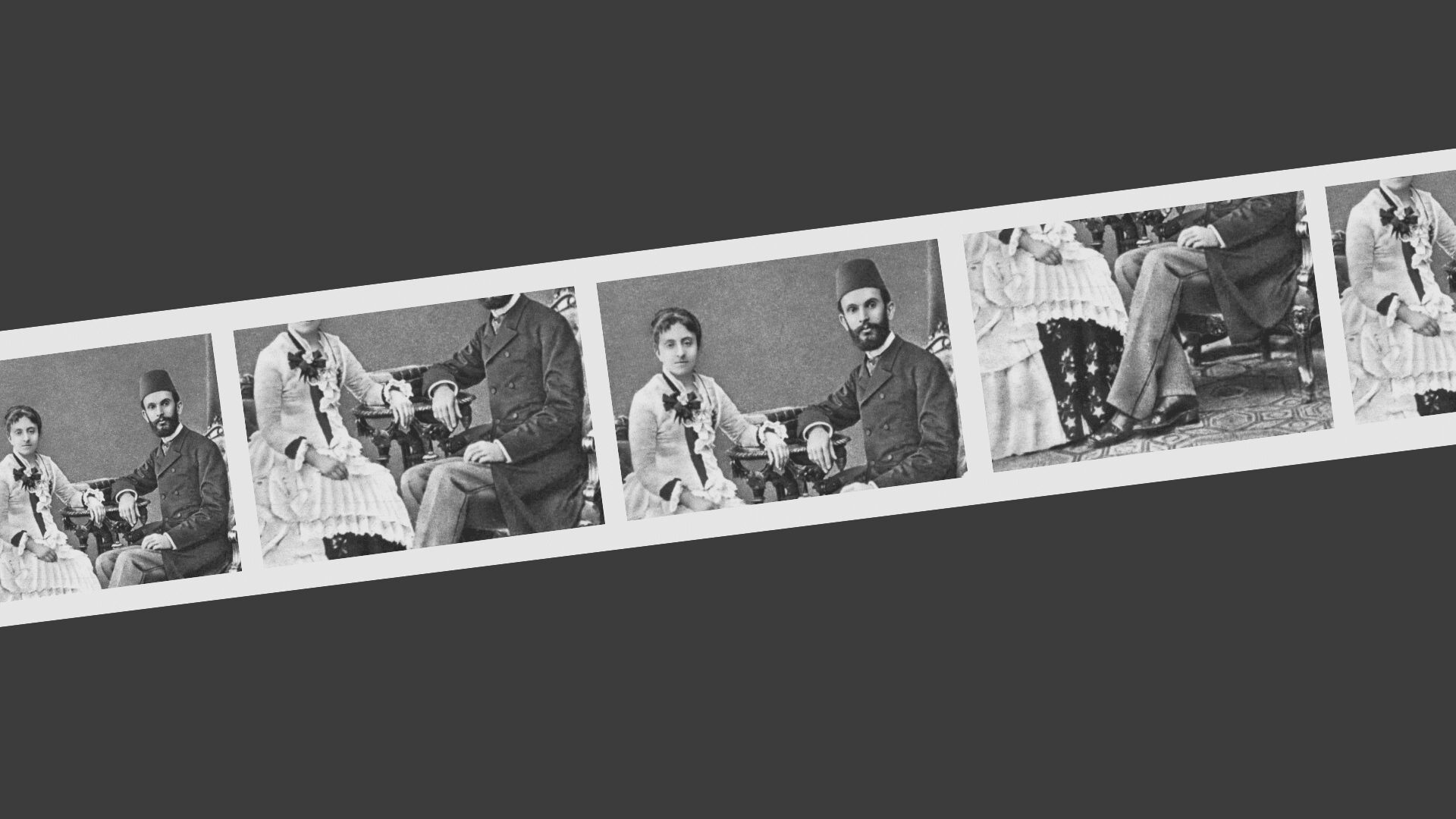
At the end of the 19th century, when Albanian society still had rigid patriarchal structures, Sami Frashëri emerged as one of the most progressive voices of his time. His work Women (1887) remains one of the earliest and most powerful texts of Albanian feminist thought. With a clarity rare for that era, Sami understood that the emancipation of a nation begins with the emancipation of women, and that any delay in this regard is a delay in national development. Thus, his idea was not merely a defense of women’s rights, but a comprehensive vision for social modernization, offering examples and arguments that women are more capable than men in many professions and are sharper-minded. He was not like those men who speak one way and act another, there are many such men among us, who have double standards. His wife, for her time, was free and strong; she undertook tasks that were then considered men’s work and even drove the carriage herself. Sami’s wife, Emine, had been born free, and Sami admired her free spirit; she remained so, with her preferences in sports and mountain climbing, activities that even today remain taboo for some women. (It seems that Galatasaray, founded by the son of Sami and Emine, ultimately attributes a woman as its muse, like many other endeavors.) Emine would also leave her mark on history with a rare photograph for the time, since women were not photographed, it was forbidden.
As for the work “Women”, Sami wrote it before he met his wife. At the center of his philosophy stands the conviction that “the development of a nation depends most of all on the condition of women”; where women are subjugated and uneducated, society remains weak and backward. This fundamental idea places women at the heart of progress, granting them not only a familial role but a historical and social one. For Sami, national progress is impossible without an educated, strong, and free woman. Therefore, girls’ education is the strongest pillar of his philosophy. He describes women’s knowledge as “the sun of the home,” seeing it as the force that illuminates not only the family but society as a whole.
“As a mother and educator of future generations, a woman cannot remain in darkness: to raise educated generations, she herself must be educated”, he said. His argument is unequivocal: developed nations do not achieve progress by leaving girls without schooling; their education is the foundation of the future.
Another important pillar of his thought is his criticism of women’s isolation. He calls their confinement to the home “slavery, not morality,” challenging one of the most deeply rooted practices of the time. For him, women must participate in social, cultural, and even professional life. Only then do they become complete individuals and contributors to society. Equality, in his view, is not a modern luxury but a natural order: “God created men and women equal in mind and in spirit.” The injustices done to women do not stem from nature, but from harmful customs, which he openly challenges.
In this spirit, Sami also strongly defends women’s right to free marriage. Forced marriage, widespread in his time, was for him a grave violation of human dignity and freedom. He states it clearly: a woman is not an object to be given and taken. Free choice is the foundation upon which a healthy family is built.
His work directly strikes at patriarchal customs that deprived women of inheritance, work, freedom, and education. He names these as vile customs, emphasizing that they have nothing to do with morality or religion, but are products of a backward society. In opposition to them, he raises a new ideal: woman as a citizen with full rights and as an equal part of the nation. Sami Frashëri’s vision was modern, European, and transformative. He admired societies that uplifted women and observed that their progress could not be understood without this uplift. “Civilized nations uplift women; therefore, they themselves are uplifted”, a call to move away from ignorance toward a future where women and men walk side by side.
Today, more than a century after the writing of Women, many of Sami Frashëri’s ideas still sound fresh and necessary. They are not merely evidence of an extraordinary thinker, but an invitation to reflect on the path we have taken and the path that lies ahead. His feminism was not a fight against men, but a fight against injustice. He said that women are not born unequal by nature; injustices are done to them by men. It was a call for equality, knowledge, and dignity for a society that uplifts itself by uplifting women. The text emphasizes that woman is the true center of the family, and that the family is sustained not only by structure or rules but by the care, love, and emotional bond she creates. The man is portrayed as a figure who leaves for work and returns, while the woman continuously bears the weight of family life by organizing, nourishing, and keeping relationships alive. Without her presence, the family empties and loses meaning, because she is the axis around which all members revolve. According to Sami, a man never truly grows up, and even when he does, he becomes an external limb of the family. In this sense, Sami Frashëri remains one of the brightest and most progressive minds in Albanian history: a humanist, a figure of the National Renaissance, and a feminist ahead of his time, who understood that enlightening women is the enlightenment of the entire nation.